



If you have been researching actinic keratosis solar keratosis, you may have come across both terms and wondered whether they describe different skin conditions. You might also be wondering whether you have actinic keratosis or solar keratosis, what the difference is, and whether one is more concerning than the other.
The simple answer is that actinic keratosis and solar keratosis are two names for the same skin condition. Both terms describe areas of sun-damaged skin that can develop after long-term exposure to ultraviolet (UV) radiation.
In this guide, we explain why both names are used, what actinic or solar keratosis can look and feel like, and when it is sensible to have a skin lesion professionally assessed.
Jump To Section
Is actinic keratosis the same as solar keratosis?
Yes. If you are wondering “is actinic keratosis the same as solar keratosis?”, there is no medical distinction between the two.
An actinic keratosis (AK) is also known as a solar keratosis. Both terms describe a patch of abnormal skin cells caused primarily by cumulative UV exposure.
The terminology can understandably cause confusion, particularly when different websites, healthcare professionals or patient information resources use different names for the condition.
You may therefore see:
- Actinic keratosis
- Solar keratosis
- Actinic keratoses
- Solar keratoses
- AK or AKs
These are referring to the same condition.
Why are there two different names?
When comparing actinic keratosis vs solar keratosis, the difference is simply terminology rather than the condition itself.
The word actinic refers to changes caused by radiation, particularly ultraviolet radiation, while solar refers to the sun. Both names therefore reflect the strong association between these skin changes and long-term exposure to UV radiation.
Actinic keratosis is commonly used as the medical term, but solar keratosis is also widely used.
So, if you have been told you have actinic keratosis or solar keratosis, you have not been diagnosed with two separate conditions.
What is this skin condition?
Actinic keratoses are areas of abnormal skin that develop as a result of cumulative sun damage.
They are particularly common on parts of the body that have received significant sun exposure over many years, such as the:
- Face
- Ears
- Scalp, particularly where hair is thin or absent
- Backs of the hands
- Forearms
- Lower legs
They are more common in people with fair skin and tend to become increasingly common with age because UV damage accumulates over time.
What does it look like?
The appearance can vary considerably from person to person.
An actinic or solar keratosis may appear as a small area of rough, dry or scaly skin. It can be pink, red, brown or similar in colour to the surrounding skin.
Sometimes the texture is more noticeable than its appearance. You may be able to feel a rough or sandpaper-like patch before it becomes particularly obvious visually.
Some lesions can become thicker or crusted, while others remain relatively flat. They may also occasionally feel tender, sore or itchy.
Because other skin conditions, including some forms of skin cancer, can sometimes have a similar appearance, photographs or online descriptions should not be relied upon to diagnose a lesion.


Is actinic keratosis a type of skin cancer?
Actinic keratosis is not usually considered a skin cancer, but it is regarded as a precancerous skin lesion.
This is important because a small proportion can progress to squamous cell carcinoma (SCC), a type of non-melanoma skin cancer. It is difficult to predict which individual lesions will progress.
Actinic keratoses are also an indication that the skin has experienced significant cumulative UV damage.
For this reason, a new, persistent or changing area of rough or abnormal skin should not automatically be assumed to be an actinic keratosis without an appropriate assessment.
When should you get it checked?
If you notice a new or changing skin lesion, particularly on an area that has received significant sun exposure, it can be sensible to have it assessed.
You should seek medical advice if an existing lesion changes noticeably, becomes thicker, grows rapidly, becomes persistently sore or tender, bleeds, ulcerates or otherwise concerns you.
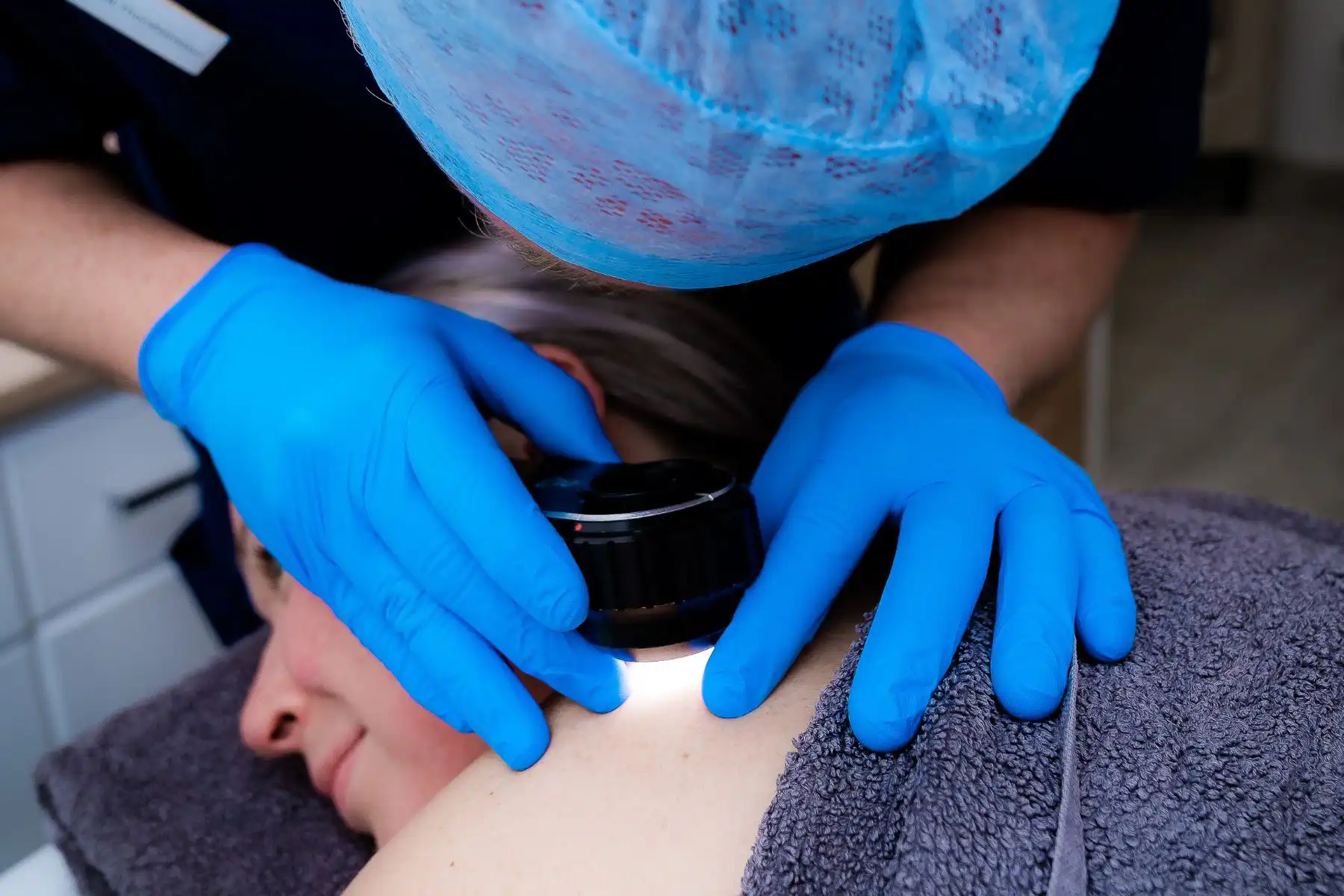
A dermatologist can examine the area and determine whether its features are consistent with an actinic keratosis or whether further investigation may be appropriate.
What treatments are available?
Yes. There are several approaches to treating actinic keratoses.
The most appropriate option depends on factors including how many lesions are present, their location and appearance, the extent of sun damage and your individual circumstances.
Some treatments target individual lesions, while others can treat a wider area of sun-damaged skin containing multiple actinic keratoses.
You can read more about the condition, assessment and available options on our [solar keratosis treatment page].

How can you reduce your risk?
As actinic keratoses are strongly associated with cumulative UV exposure, protecting your skin from the sun can help reduce further damage.
This includes using a broad-spectrum sunscreen with a high SPF, wearing protective clothing and a wide-brimmed hat, seeking shade during periods of strong sunlight and avoiding deliberate tanning or sunbeds.
It is also useful to become familiar with your skin so that you are more likely to notice new or changing areas.

Actinic keratosis or solar keratosis: the key takeaway
Whether you hear the term actinic keratosis or solar keratosis, they refer to the same condition.
There is therefore no clinical difference when considering actinic keratosis vs solar keratosis. Both describe areas of sun-damaged skin caused by cumulative exposure to UV radiation.
Although actinic keratoses are not usually considered skin cancer, they are precancerous lesions and some can develop into squamous cell carcinoma. If you have a new, changing or persistent skin lesion, a professional assessment can help establish what it is and whether treatment or monitoring is appropriate.
How to Book a Consultation
Although actinic keratosis and solar keratosis are two names for the same condition, it is not always possible to identify a skin lesion based on appearance alone.
If you have noticed a new, changing, rough or persistent area of skin, particularly on a sun-exposed area, a dermatology consultation can help establish what it is and whether treatment or monitoring is appropriate.
At Freyja Medical, our experienced dermatology team assesses a wide range of skin lesions, including actinic keratoses and other sun-damaged or potentially concerning changes.