



Melanoma on the scalp is a type of skin cancer that develops in the pigment-producing cells (melanocytes) within the skin of the scalp. It can sometimes appear as melanoma in hair on head, making it difficult to spot because it is often hidden beneath the hair. Although it accounts for only a small proportion of all melanomas, it is considered one of the more serious forms because it is frequently diagnosed later than melanoma elsewhere on the body. Looking at melanoma on scalp images can help you recognise suspicious changes, but any new or changing lesion should always be assessed by an experienced medical professional.
Like all forms of melanoma, early diagnosis is essential. When detected at an early stage, treatment is often highly successful. Learning how to recognise the warning signs and checking your scalp regularly can help identify changes sooner and improve the chances of successful treatment.
Jump To Section
What Is Melanoma on the Scalp?
Melanoma is the most serious type of skin cancer. It develops when melanocytes, the cells responsible for producing melanin (the pigment that gives skin and hair their colour), begin to grow uncontrollably.
While many people associate melanoma with the arms, legs or back, it can develop anywhere on the skin, including the scalp. It may appear as a new dark spot, develop within an existing mole, or occasionally present as a pink, red or skin-coloured lesion. Because it is hidden beneath the hair, it can be much harder to notice during routine skin checks. People searching online for melanoma in hair on head are often trying to determine whether a changing mole hidden beneath the hair could be a sign of skin cancer.
Scalp melanoma is relatively uncommon compared with melanoma on other areas of the body, but studies have shown that it is more likely to be diagnosed at a later stage. This is largely because it remains hidden until it becomes more noticeable or causes symptoms.
Why Can Melanoma on the Scalp Be More Serious?
The location of melanoma on the scalp can make it more challenging to detect than melanoma on more visible areas of the body. Many people rarely examine their scalp closely, particularly if they have thick or long hair, meaning suspicious changes may go unnoticed for months. This is one of the reasons why melanoma in hair on head is often diagnosed later than melanoma on other parts of the body.
Later diagnosis often means the melanoma has had more time to grow deeper into the skin before treatment begins. The thickness of a melanoma at the time of diagnosis is one of the most important factors affecting prognosis.
The scalp also contains a rich network of blood vessels and lymphatic channels, which may contribute to the way some melanomas behave. However, it is important to remember that outcomes depend primarily on how early the melanoma is diagnosed. Prompt assessment and treatment provide the best opportunity for successful management.
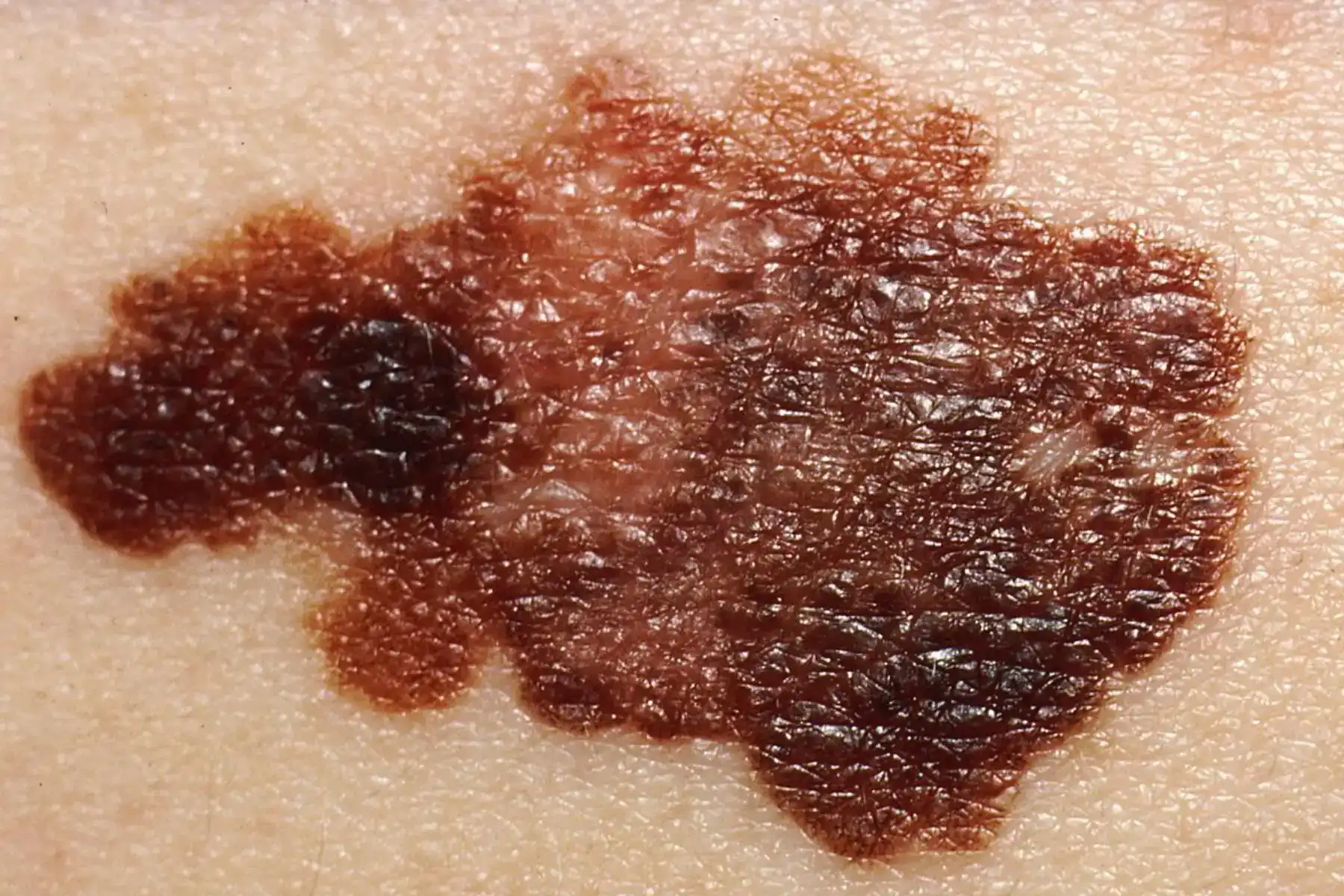
What Does Melanoma on the Scalp Look Like?
Melanoma on the scalp does not always look the same. Some lesions are dark brown or black, while others may contain several different colours or very little pigment at all. They may be flat or raised and can slowly change over time.
Comparing a suspicious lesion with reliable melanoma on scalp images can help you understand what to look for, although photographs should never replace a professional examination.
Signs to look out for include:
- A new mole or dark patch appearing on the scalp
- A mole that changes in size, shape or colour
- An irregular or uneven border
- Several different colours within the same lesion
- A lesion that bleeds, crusts or does not heal
- Persistent itching, tenderness or discomfort
- A spot that looks noticeably different from your other moles

While melanoma on scalp images can help you recognise possible warning signs, melanoma varies considerably in appearance. Not every unusual mark is melanoma, but any new or changing lesion should always be assessed promptly by a dermatologist.


The ABCDE Rule
The ABCDE rule is a useful guide for recognising features that may suggest melanoma.
| Letter | What it means |
|---|---|
| A – Asymmetry | One half of the lesion does not match the other. |
| B – Border | The edges are uneven, blurred or irregular. |
| C – Colour | Multiple shades of brown, black, red, white or blue are present. |
| D – Diameter | Larger than 6 mm, although some melanomas are smaller. |
| E – Evolving | The lesion changes in size, shape, colour or symptoms over time. |

Comparing these warning signs with reputable melanoma on scalp images can help you understand what changes to look for during regular skin checks.
While this checklist is helpful, not every melanoma follows these rules exactly. If a lesion appears unusual or continues to change, it should always be examined, regardless of whether it meets all of the ABCDE criteria.
Can Melanoma Develop Under Hair?
Yes. Melanoma can develop anywhere on the scalp, including areas completely covered by hair. This is one of the reasons why scalp melanoma is often diagnosed later than melanoma elsewhere on the body.
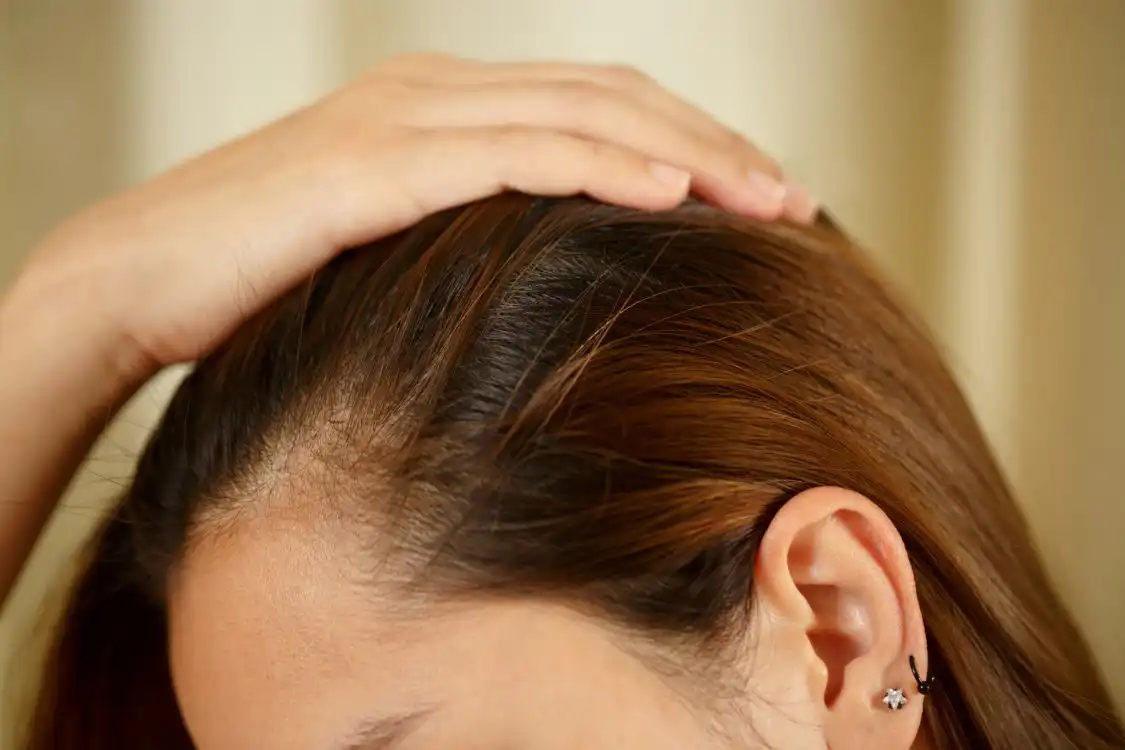
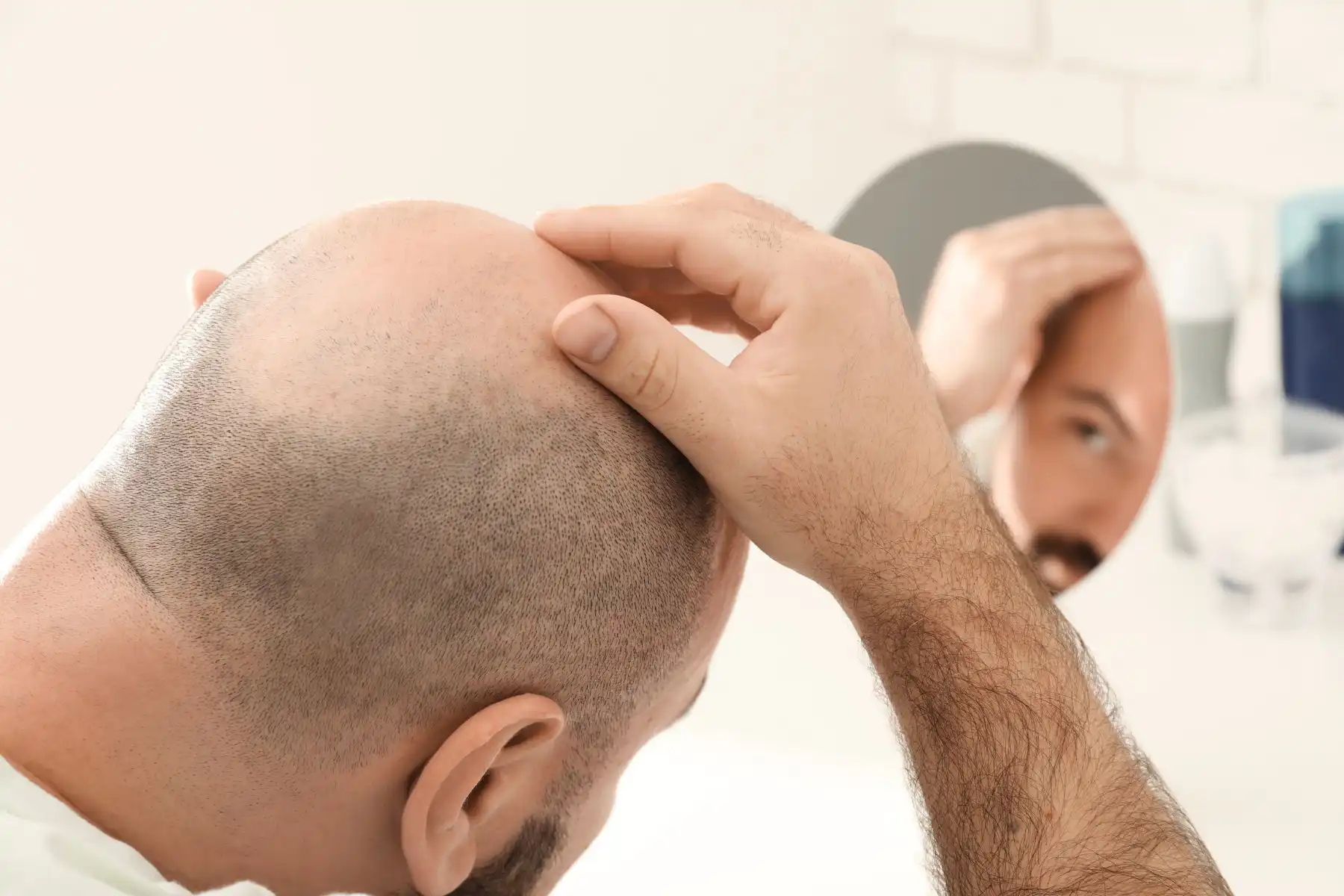
Regular scalp checks are an important part of skin self-examination. Using a mirror or asking a partner, family member or friend to look through your hair can help identify changes that you might otherwise miss. Hairdressers and barbers also occasionally notice suspicious lesions during appointments, highlighting the importance of having any unusual marks assessed promptly.
People with thinning hair or bald patches should remember that exposed areas of the scalp are also vulnerable to ultraviolet (UV) damage from the sun and should be protected with sunscreen or a suitable hat.
Who Is Most at Risk of Melanoma on the Scalp?
Anyone can develop melanoma, but certain factors increase the likelihood of developing the condition.
Risk factors include:
- Fair skin that burns easily
- Light-coloured eyes or fair hair
- A history of frequent sunburn, particularly during childhood
- High levels of ultraviolet (UV) exposure from sunlight or sunbeds
- Having a large number of moles or atypical (unusual) moles
- A personal history of melanoma or other skin cancers
- A close family history of melanoma
- A weakened immune system
- Increasing age
- Male sex, particularly in older adults
Having one or more of these risk factors does not mean you will develop melanoma, and people without any obvious risk factors can still be affected.
The most important step is becoming familiar with your own skin, including your scalp, so that you can recognise any new or changing lesions. Early assessment by an experienced dermatology professional offers the best chance of diagnosing melanoma before it has progressed.
Whether you have several risk factors or none at all, checking for possible melanoma in hair on head should form part of your regular skin self-examination.
How Is Melanoma on the Scalp Diagnosed?
If you notice a new or changing lesion on your scalp, it is important to arrange an assessment as soon as possible. Early diagnosis significantly improves the chances of successful treatment.
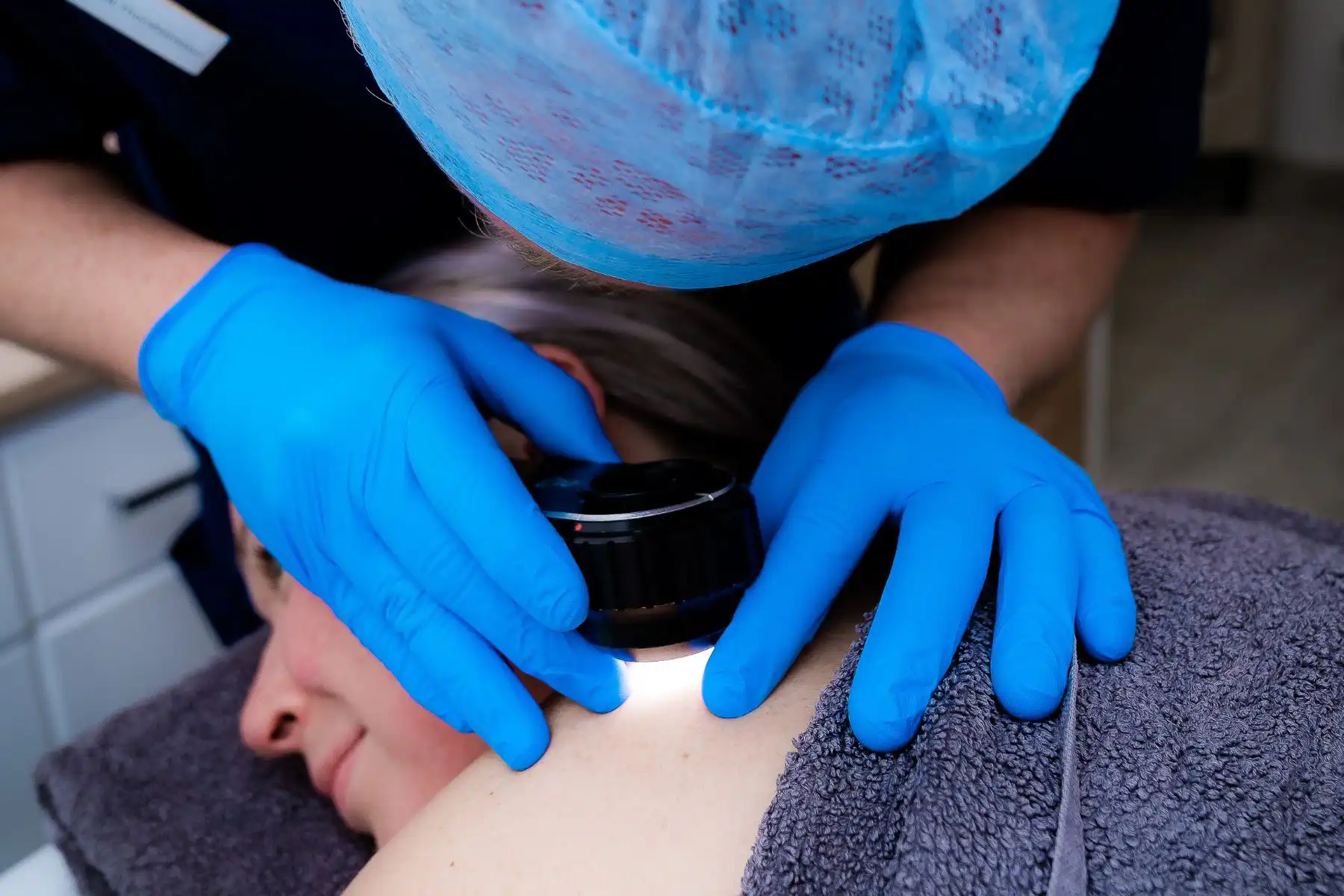
During your appointment, a dermatologist or other suitably trained healthcare professional will examine the lesion and ask about any recent changes, symptoms and your medical history. A device called a dermatoscope is often used to examine the lesion under magnification, allowing features beneath the skin surface to be assessed in greater detail. While melanoma on scalp images found online may raise concern, only a clinical examination and biopsy can confirm whether a lesion is cancerous.
If melanoma is suspected, the lesion will usually be removed using an excision biopsy. This involves removing the entire lesion, along with a small margin of normal skin, before it is sent to a laboratory for analysis.
The pathology report confirms whether the lesion is melanoma and provides important information, including:
- The thickness of the melanoma (Breslow thickness)
- Whether ulceration is present
- Whether the melanoma has been completely removed
- The specific subtype of melanoma
These findings help determine whether any additional treatment or investigations are required.
How Is Melanoma on the Scalp Treated?
Treatment depends on the stage of the melanoma, its thickness and whether it has spread beyond the skin.
Surgery
Surgery is the main treatment for most cases of melanoma on the scalp. Following the initial biopsy, a wide local excision is usually performed to remove a larger margin of surrounding healthy skin. This helps reduce the risk of melanoma cells being left behind.
Because the scalp has relatively little loose skin, reconstruction may occasionally be required after larger excisions. Your specialist will explain the most appropriate approach based on the size and location of the melanoma.
Sentinel Lymph Node Biopsy
Some patients may be offered a sentinel lymph node biopsy, particularly if the melanoma is above a certain thickness or has other high-risk features.
This procedure identifies and removes the first lymph node that drains the area where the melanoma developed. It helps determine whether melanoma cells have spread beyond the skin and provides valuable staging information.
Additional Treatments
If melanoma has spread beyond the original site, further treatment may be recommended. Depending on the stage of the disease, this may include:
- Immunotherapy
- Targeted therapy
- Radiotherapy in selected cases
- Regular surveillance with follow-up appointments and imaging where appropriate
Your treatment plan will always be tailored to your individual diagnosis and discussed in detail by your specialist team.

Can Melanoma on the Scalp Be Prevented?
Although melanoma cannot always be prevented, there are steps you can take to reduce your risk and improve the chances of detecting it early.
These include:
- Wearing a wide-brimmed hat when outdoors in strong sunlight
- Applying sunscreen to exposed areas of the scalp, particularly if you have thinning hair or a bald scalp
- Avoiding sunbeds
- Limiting excessive UV exposure, especially during the middle of the day
- Checking your skin and scalp regularly for new or changing lesions
- Attending professional skin examinations if you are at increased risk of melanoma
Many people remember to protect their face and shoulders but overlook the scalp. Including your scalp in your regular skin checks makes it easier to notice possible melanoma in hair on head before it has time to grow unnoticed.

When Should You See a Dermatologist?
You should arrange an assessment if you notice:
- A new mole or pigmented lesion on your scalp
- A mole that changes in size, shape or colour
- Bleeding, crusting or a sore that does not heal
- Persistent itching, pain or tenderness
- A lesion that looks noticeably different from your other moles
- Any rapidly changing spot
If you are concerned about melanoma in hair on head, do not wait to see whether the lesion changes further before arranging an assessment.
It is always better to have a suspicious lesion assessed promptly rather than waiting to see whether it improves. Most lesions will not be melanoma, but only a proper examination can confirm this.

Frequently Asked Questions
Is melanoma on the scalp common?
No. Melanoma on the scalp is less common than melanoma on areas such as the back, arms or legs. However, because it can remain hidden beneath the hair, it is often diagnosed later than melanoma elsewhere on the body. Looking at trusted melanoma on scalp images can help you recognise suspicious lesions, particularly those hidden beneath the hair.
Is melanoma on the scalp painful?
Not usually. Many scalp melanomas cause no symptoms in their early stages. Some may become itchy, tender, bleed or form a crust as they develop, but these features are not always present.
Can hair grow through melanoma?
Yes. Hair can continue to grow through some melanomas, so the presence of hair does not mean a lesion is harmless. Any changing or unusual lesion should still be assessed by a healthcare professional. This is one reason why melanoma in hair on head can sometimes be difficult to recognise.
Can a hairdresser spot melanoma?
Hairdressers and barbers may occasionally notice suspicious lesions while cutting or styling hair because they regularly see areas of the scalp that are difficult for you to examine yourself. If someone draws your attention to an unusual mole or mark, it is sensible to arrange a medical assessment.
Is melanoma on the scalp curable?
When melanoma on the scalp is diagnosed early and treated promptly, there is an excellent chance of successful treatment. As with melanoma elsewhere on the body, early detection before the cancer has spread offers the best possible outlook.
How to Book a Consultation
Melanoma on the scalp can be difficult to detect because it is often hidden beneath the hair, making regular scalp checks just as important as examining the rest of your skin. Becoming familiar with your own scalp and seeking prompt medical advice for any new or changing lesion can make a significant difference to treatment outcomes.
If you’re concerned about a suspicious mole, reviewing reputable melanoma on scalp images may help you recognise warning signs, but a professional assessment remains essential.
At Freyja Medical, our consultant-led dermatology team provides expert assessment of suspicious moles and pigmented lesions using advanced diagnostic techniques. If you have noticed a changing mole or are concerned about a lesion on your scalp, arranging a professional assessment can provide reassurance or ensure that treatment begins as early as possible.